How to Change a Tire Step-by-Step Guide
A flat tire can happen on any road, at any time. It does not care about your schedule.
The good news? You do not need a mechanic to fix it. With the right tools and a clear process, you can change a tire yourself and get back on the road in about 15 to 20 minutes.
This guide covers everything step by step. Each step is simple, direct, and easy to follow, even if you have never done this before.
What You Need to Change a Tire
Most of these items already came with your car. Check your trunk before you ever need them.
Here is what you need:
- Spare tire ➔ stored under the trunk floor or mounted under the vehicle. Make sure it is inflated.
- Car jack ➔ used to lift the car off the ground. Comes with the car.
- Lug wrench ➔ used to loosen and tighten the lug nuts. Also comes with the car.
- Vehicle owner’s manual ➔ tells you the exact jack placement for your car. Usually in the glove compartment.
- Wheel wedges ➔ placed against the tires to stop the car from rolling. Rocks or bricks work too.
A few extra items are helpful to keep in your trunk:
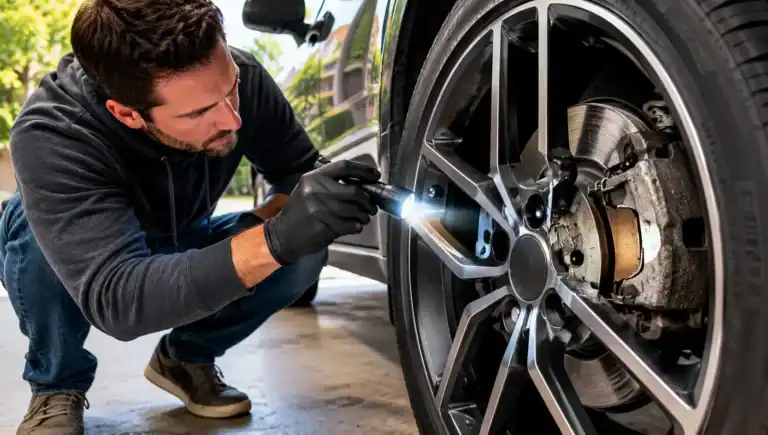
- Flashlight (for night or low-light situations)
- Gloves (tires and lug nuts get dirty)
- Reflective triangle or safety vest (makes you visible to other drivers)
You do not need to buy anything special. The first three items on that list are already in your car right now.
How to Change a Flat Tire: 8 Steps
Changing a flat tire is simpler than most people think. Follow these steps and you will get it done without any hassle.
Step 1: Pull Over and Secure the Car
Find a flat, safe spot away from traffic. Turn on your hazard lights, engage the parking brake, and put the car in park. Place wheel wedges or rocks against the tires to stop the car from rolling.
Step 2: Loosen the Lug Nuts First (Before Jacking Up)
Use the lug wrench and turn each lug nut counterclockwise. Just break the resistance, do not remove them yet.
This step has to be done before you jack up the car. Once the tire is off the ground, it spins freely and you lose all leverage. Doing it now makes the job way easier.
If a lug nut feels stuck, place the wrench horizontally and use your foot to push down on it.
Step 3: Jack Up the Car
Check your owner’s manual for the exact jack point. It is usually along the metal frame, just behind the front wheels or just in front of the rear wheels. Placing the jack at the wrong spot can crack the plastic underbody or damage the frame.
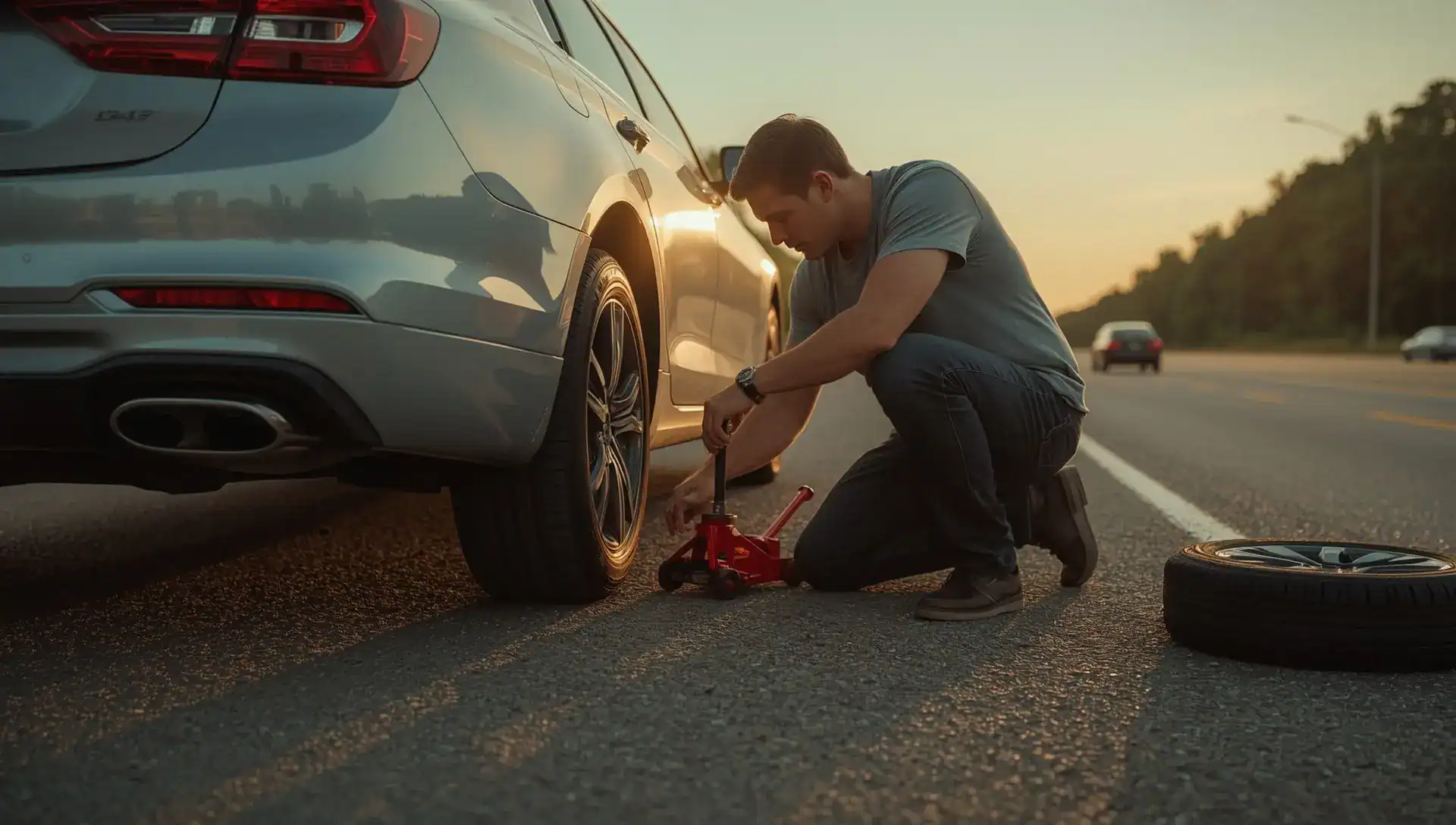
Once the jack is in position, raise the car until the flat tire is about 6 inches off the ground. Never put any part of your body under the car while it is on the jack.
Step 4: Remove the Flat Tire
Remove the lug nuts completely by hand and put them in your pocket so they do not get lost.Grip the tire with both hands and pull it straight toward you. Set it flat on the ground so it does not roll away.
Heads up if the tire feels stuck, that is normal. Rust and heat can make it stick to the hub. Give the sidewall a firm kick with your foot to break it loose.
Step 5: Mount the Spare Tire
Pick up the spare and line up the holes with the wheel studs. Make sure the valve stem is facing outward, away from the car. This is how you know the tire is on the right way.
Push the tire onto the studs until it sits flush against the hub. Hand-tighten the lug nuts to hold it in place. Do not use the wrench yet full tightening comes after the car is back on the ground.
Step 6: Hand-Tighten the Lug Nuts (Star Pattern)
Put each lug nut back on by hand. Tighten them in a star pattern, tighten one, then move to the nut directly across from it, not the one next to it. Get them snug but do not use the wrench yet.
Skipping the star pattern is where most people mess up. Going in a circle lets the tire shift and sit crooked on the hub. The star pattern spreads pressure evenly so the wheel seats flat and stays that way.
Step 7: Lower the Car
Slowly lower the jack until the spare tire touches the ground. For a scissor jack, turn the handle counterclockwise. For a hydraulic jack, slowly open the release valve.
Do not drop the car all the way down yet. Stop when the tire just touches the ground and the car’s weight starts to rest on it. You will need this position to fully tighten the lug nuts in the next step.
Step 8: Fully Tighten and Do a Final Check
Now use the lug wrench to fully tighten each nut. Same star pattern as before. Push down with your body weight to make sure they are really tight. Go around the star pattern one more time to double check each nut.
Lower the car all the way and remove the jack. Put the flat tire in your trunk you will need the rim when you get it repaired. Before you drive off, give the spare tire a quick look to make sure it sits flush against the hub with no wobble. One more thing after driving 50 to 100 miles, stop and recheck the lug nuts. They can loosen slightly as the wheel settles in.
Driving on a Spare Tire What You Need to Know
Most spare tires are donuts smaller, lighter, and built for emergencies only. They are not a replacement for your regular tire. The rule is simple: keep it under 50 mph and do not drive more than 50 miles on it. Pushing past these limits builds up heat fast and raises the risk of a blowout.
A donut also affects how your car handles. Braking feels different, and your ABS or traction control warning lights may come on that is normal. Do not panic. It just means your car’s sensors detect a size difference. Head to a tire shop as soon as you can to get your flat repaired or replaced.
One exception: if your spare is a full-size match to your other tires, you are good to drive on it normally. Check your trunk it will look just like your regular tires if it is full-size.
Frequently Asked Questions About Changing a Tire
How long does it take to change a tire?
Most people get it done in 15 to 20 minutes once they know the steps. Your first time might take closer to 30. The more you practice, the faster it gets.
What if my car does not have a spare tire?
Some newer cars skip the spare and come with a tire sealant kit instead. Use the sealant to seal small punctures and inflate the tire enough to reach a shop. It only works on minor tread punctures, not sidewall damage. If the damage is major, call roadside assistance.
Can I drive on a flat tire to find a safe spot?
Yes, but only for a very short distance just enough to get off the highway or away from traffic. Driving any further destroys the rim fast and makes the repair far more expensive.
Is it hard to change a tire by yourself?
Not at all. The tools are already in your car, and the whole process is eight steps. Most people who have never done it before figure it out on their first try. The steps in this guide are all you need.